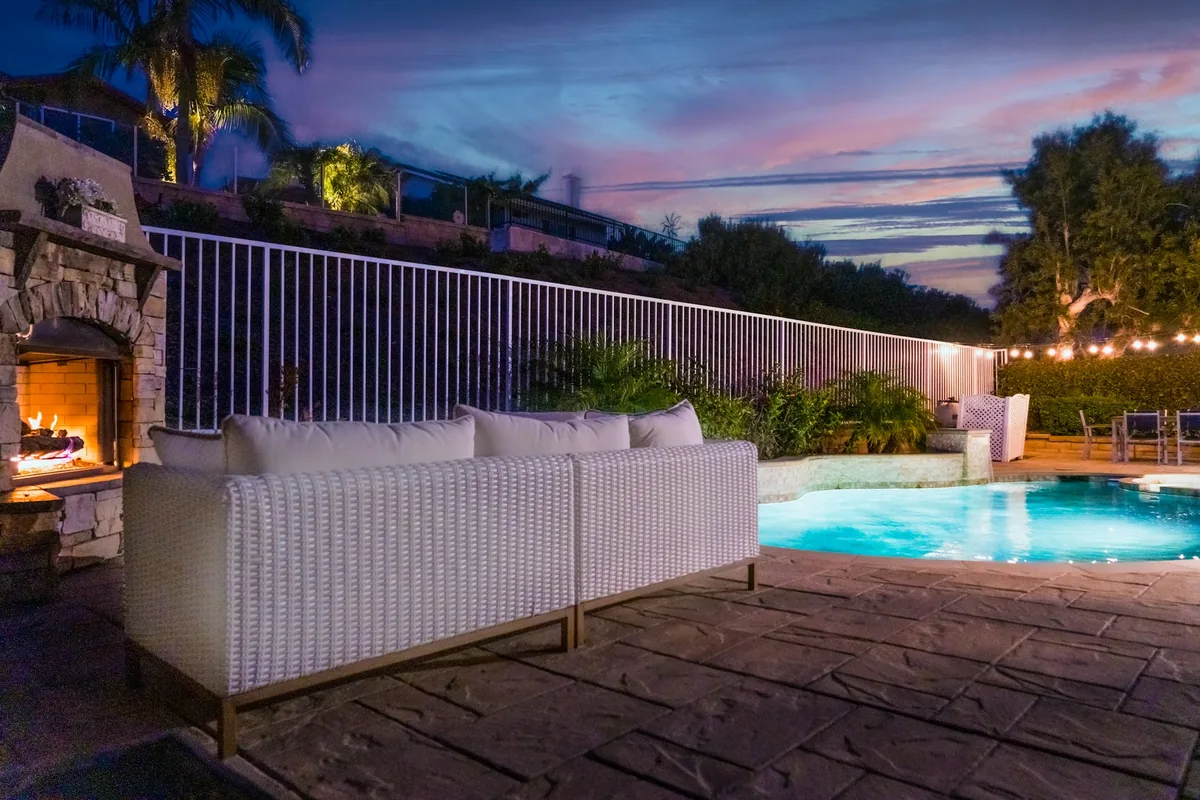
Pool deck resurfacing in Temecula CA: when it makes sense
Resurfacing puts a thin new layer on a deck that is still structurally sound. It is the right call for a deck that looks worn, stained or rough but is still flat and solid, and the wrong one for a deck that is breaking up underneath. New decks and the rest of our flatwork are on the concrete contractor in Temecula CA page; this page is only about resurfacing an existing deck.
- A faded or flaking cool-deck coating that has gone rough on bare feet.
- Hairline cracks and stains across an otherwise solid broom-finished deck.
- A plain deck the owner wants to look like stone, slate or wood without tearing it out.
- A dark stamped deck that gets too hot in summer and should be lighter.
- Chipped edges where the deck meets the coping, repaired as part of the job.
Resurfacing options and what they cost
| Option | Price per sq ft | What you get |
|---|---|---|
| Clean and reseal | $1 to $3 | Refreshed color and protection; no new surface |
| Basic resurfacing coat | $3 to $6 | New uniform surface over sound concrete |
| Kool Deck coating | $4 to $6 | Cooler, non-slip finish, a common pool look |
| Decorative overlay or knockdown | $6 to $12 | Texture and color, troweled or sprayed |
| Stamped overlay | $7 to $20 | Stone, slate or wood patterns on the old deck |
| Tear out and new stamped deck | Priced as new concrete | When the old deck is cracked or heaved |
HomeGuide pool deck resurfacing cost guide (2026): $3 to $12 per sq ft, $1,500 to $10,800 for 500 to 900 sq ft, about $6,200 on average; sealing $1 to $3 per sq ft. National ranges; quotes vary by site.
Heat underfoot
Temecula's NOAA station averages 60 days a year at 90°F or more, and a deck in full sun gets much hotter than the air. Light colors and cool-deck coatings stay more comfortable than dark stamped surfaces, which is worth weighing before picking a deep charcoal pattern. The hot weather guide has the climate numbers.
Grip near the water
Around a pool the finish has to stay grippy when wet. Concrete Network notes that even textured stamped concrete can become slippery when wet or under a film-forming sealer, and suggests a heavier texture or a non-skid additive in the sealer for pool decks.
How a pool deck is resurfaced, step by step
- 1Check the deck is sound
The deck is sounded for hollow spots and checked for heaved or sunken sections; resurfacing only works on concrete that is still solid and roughly flat.
- 2Clean and open the surface
Old coating, sealer and dirt come off by pressure washing and grinding, so the new layer bonds to clean concrete rather than to the old finish.
- 3Repair cracks and joints
Cracks are routed and filled, chipped edges along the coping rebuilt, and the joint between the deck and the coping cleared so the new surface doesn't bridge it.
- 4Apply the new surface
A bonding coat goes on, then the overlay: a troweled or sprayed knockdown texture, a cool-deck coating or a stamped overlay, in the chosen color.
- 5Seal and wait
The surface gets a sealer suited to wet bare feet, and the deck stays dry and off-limits for the cure time the product calls for.
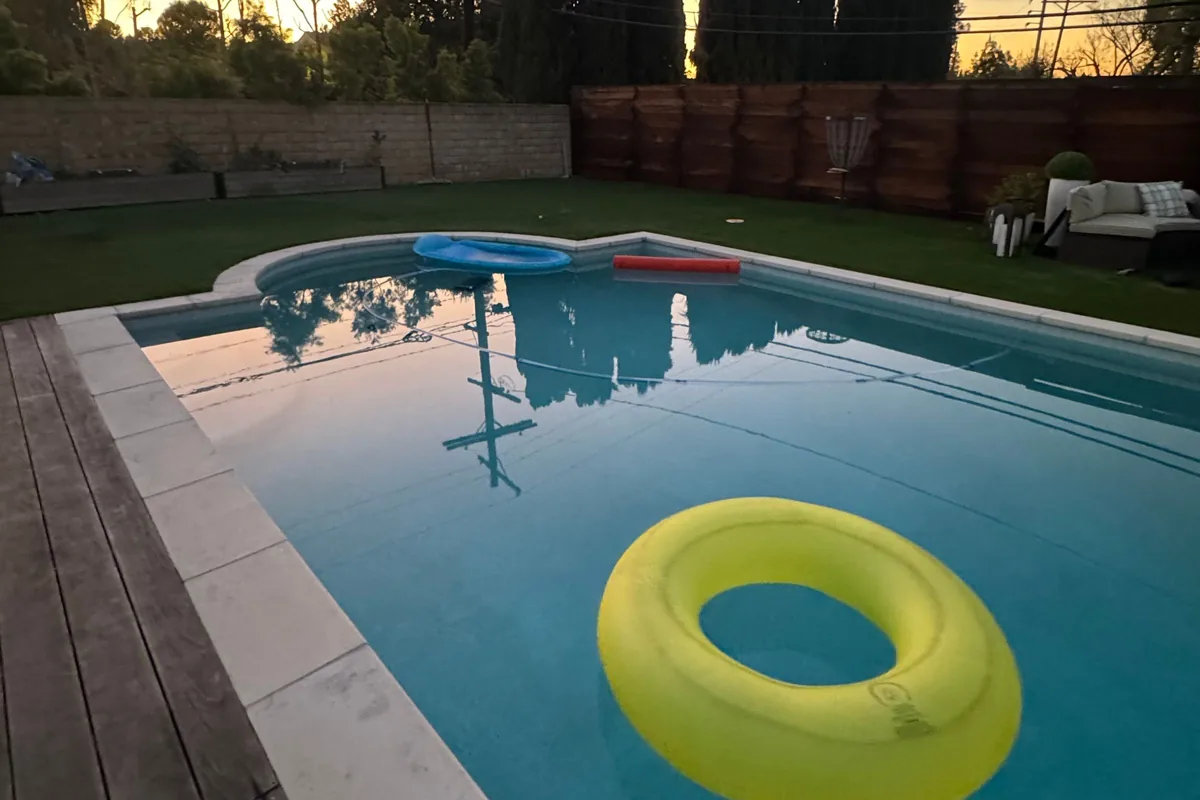
What resurfacing doesn't cover
Resurfacing the deck is concrete work. The plaster inside the pool, the tile line and the coping stones themselves are pool trades, though the joint between the deck and the coping is cleaned and sealed as part of a deck job. In a planned tract, a change in deck color or pattern may need association approval; the HOA approval guide explains how review works.